

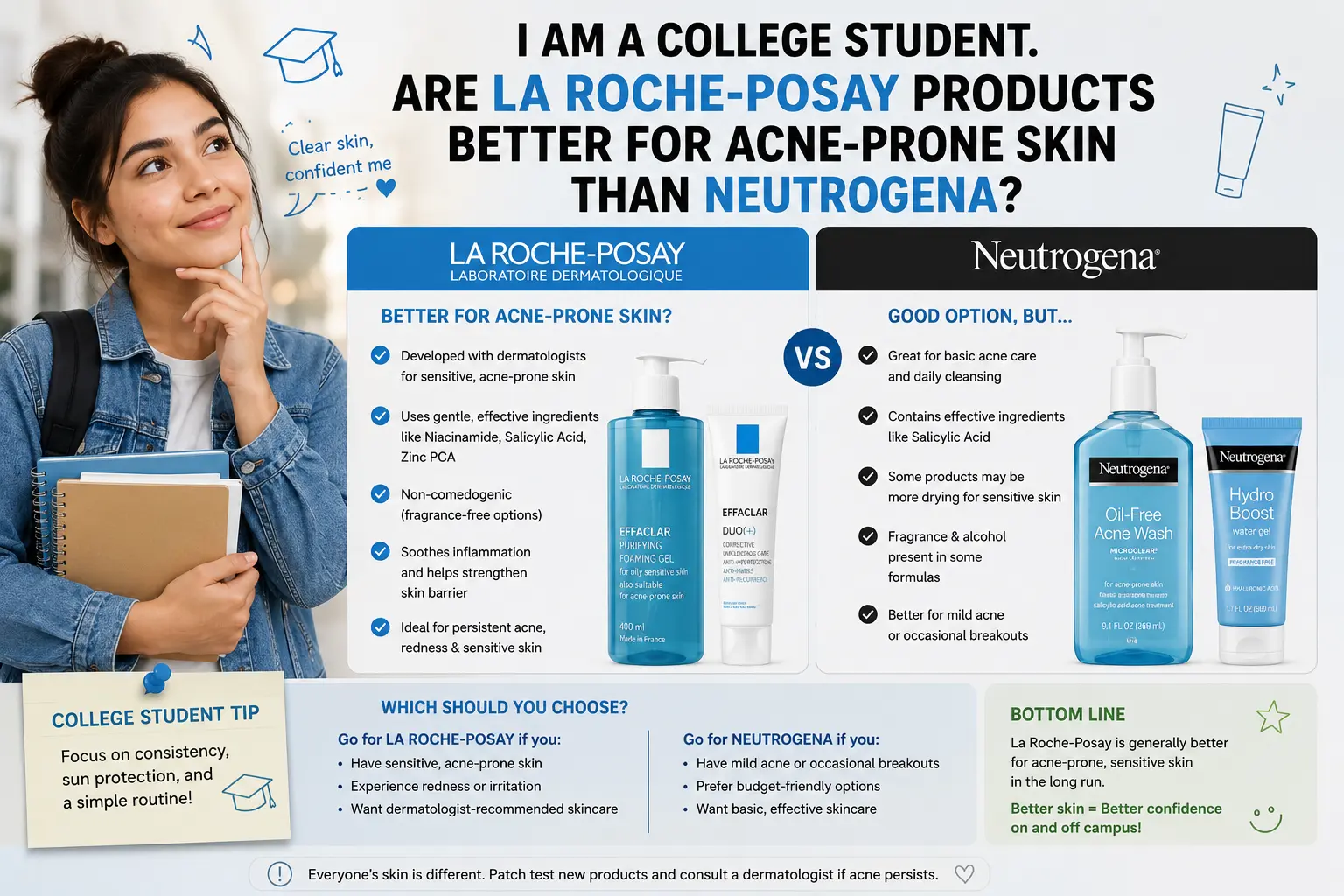
Acne is one of the most common skin concerns among college students. Between late-night study sessions, stress, irregular sleep, cafeteria food, and changing hormones, it’s no surprise that breakouts become a regular part of student life. When you decide to build a skincare routine, two brands often stand out: La Roche-Posay and Neutrogena.
But if you’re asking:
“I’m a college student. Are La Roche-Posay products better for acne-prone skin than Neutrogena?”
The answer isn’t simply yes or no.
La Roche-Posay is generally known for gentle, dermatologist-recommended formulas that support sensitive and acne-prone skin, while Neutrogena offers a wider range of affordable acne treatments with active ingredients like salicylic acid and benzoyl peroxide. The better choice depends on your skin type, acne severity, budget, and skincare goals.
This comprehensive guide compares both brands to help you make an informed decision without wasting money on products that may not suit your skin.
Quick Answer
If you’re looking for a concise recommendation:
- Choose La Roche-Posay if: You have sensitive, acne-prone skin, experience irritation easily, or want a gentle skincare routine focused on protecting your skin barrier.
- Choose Neutrogena if: You’re on a tighter college budget and want accessible acne-fighting products with proven active ingredients.
- For many students: A simple routine that combines a gentle cleanser, a non-comedogenic moisturizer, and sunscreen is more important than choosing one brand over another.
Why Acne Is So Common in College
College life introduces several factors that can contribute to breakouts:
Increased Stress
Exams, assignments, internships, and deadlines can increase stress levels. Stress may influence hormone production, which can contribute to excess oil production and acne in some people.
Irregular Sleep
Late-night studying and inconsistent sleep schedules can affect overall skin health and make it harder for your skin to recover.
Diet Changes
Many students rely on fast food, sugary snacks, and caffeinated beverages. While diet isn’t the sole cause of acne, some people notice that certain foods may worsen their breakouts.
Skipping Skincare
Busy schedules often lead students to sleep with makeup on, forget sunscreen, or skip cleansing after workouts.
What Makes a Good Acne Skincare Brand?
Before comparing brands, it’s important to understand what to look for in acne-friendly skincare.
A good acne skincare routine should include:
- A gentle cleanser that removes oil without over-drying the skin.
- A lightweight, non-comedogenic moisturizer.
- Sunscreen suitable for acne-prone skin.
- Acne treatments used as needed, based on your skin’s tolerance.
Consistency is usually more important than using many products at once.
About La Roche-Posay
La Roche-Posay is a French skincare brand often recommended by dermatologists for people with sensitive skin. Many of its products are designed to support the skin barrier while addressing concerns like acne, redness, and dryness.
What Stands Out?
- Gentle formulations
- Products developed for sensitive skin
- Lightweight moisturizers
- Non-comedogenic options
- Ingredients that help maintain the skin barrier
Best For
- Sensitive skin
- Combination skin
- Acne-prone skin that becomes irritated easily
- People using prescription acne treatments
About Neutrogena
Neutrogena is a well-known drugstore brand that offers a wide variety of skincare products at affordable prices. It has long been recognized for acne-focused cleansers, spot treatments, and oil-control products.
What Stands Out?
- Budget-friendly pricing
- Wide availability
- Acne-specific product lines
- Beginner-friendly options
- Variety for different skin types
Best For
- Oily skin
- Mild to moderate acne
- Students on a limited budget
- First-time skincare users
Ingredient Comparison
The effectiveness of a skincare product depends more on its ingredients than its brand name.
Salicylic Acid
Salicylic acid is one of the most common ingredients used for acne-prone skin. It helps unclog pores by exfoliating inside the pore lining and can reduce blackheads and whiteheads over time.
Both La Roche-Posay and Neutrogena include salicylic acid in several acne-focused products.
Benzoyl Peroxide
Benzoyl peroxide helps reduce acne-causing bacteria and is commonly used for inflammatory acne. It can be effective but may also cause dryness or irritation, especially when first introduced.
Neutrogena has several products featuring benzoyl peroxide, making it a practical choice for those looking for targeted acne treatments.
Niacinamide
Niacinamide is a versatile ingredient that can help reduce redness, improve the appearance of enlarged pores, regulate oil production, and support the skin barrier.
La Roche-Posay includes niacinamide in a number of products designed for sensitive and acne-prone skin.
Ceramides
Ceramides are lipids that help strengthen the skin’s protective barrier. A healthy barrier is especially important if you’re using acne treatments that can dry out your skin.
La Roche-Posay places a stronger emphasis on barrier-supporting ingredients than many budget skincare brands.
Why the Skin Barrier Matters
One of the biggest mistakes people with acne make is trying to “dry out” every pimple.
In reality, over-cleansing, harsh scrubs, or using too many acne treatments can damage your skin barrier. When this happens, your skin may become:
- Red
- Tight
- Flaky
- More sensitive
- Prone to further irritation
A healthy skin barrier helps your skin retain moisture and defend itself against environmental stressors. That’s why many dermatologists recommend pairing acne treatments with a gentle moisturizer.
Which Brand Is More Gentle?
If your skin often feels irritated, burns after applying products, or becomes dry when using acne treatments, gentleness should be a priority.
La Roche-Posay is generally known for formulations that balance acne care with barrier support, making it a popular option for sensitive skin.
Neutrogena also offers gentle products, but some of its acne-focused formulas use stronger active ingredients that may require gradual introduction.
Price Comparison for College Students
Budget is an important consideration when you’re managing tuition, books, rent, and daily expenses.
Here’s a general comparison:
| Feature | La Roche-Posay | Neutrogena |
|---|---|---|
| Average Price | Higher | Lower |
| Drugstore Availability | Good | Excellent |
| Long-Term Value | High-quality formulas | Affordable daily use |
| Student Budget Friendly | Moderate | Excellent |
If you’re building your very first skincare routine with limited funds, Neutrogena may allow you to purchase a cleanser, moisturizer, and sunscreen for less than a premium skincare routine.
However, if your skin is sensitive and you’ve struggled with irritation from other products, investing in a few carefully chosen La Roche-Posay products may be worthwhile.
Does More Expensive Mean Better?
One of the biggest misconceptions in skincare is that a higher price guarantees better results.
In reality:
- Expensive products are not automatically more effective.
- Affordable products can work very well when they contain proven ingredients.
- The right routine matters more than the logo on the bottle.
Your skin responds to ingredients, consistency, and patience—not just the price tag.
Cleanser Comparison: Which One Is Better for Acne-Prone Skin?
A cleanser is the foundation of every skincare routine. It removes excess oil, dirt, sweat, sunscreen, and impurities that accumulate throughout the day. However, using the wrong cleanser can strip your skin of its natural moisture, leading to irritation and even more oil production.
La Roche-Posay Cleansers
La Roche-Posay is well-known for creating gentle cleansers that effectively clean the skin without leaving it feeling tight or dry. Many of its cleansers are formulated for sensitive skin and support the skin’s natural barrier.
Pros:
- Gentle on sensitive skin
- Helps maintain the skin barrier
- Suitable for daily use
- Non-comedogenic formulas
- Often fragrance-free or lightly scented
Best for:
- Sensitive acne-prone skin
- Dry or combination skin
- Students using prescription acne medication
Neutrogena Cleansers
Neutrogena offers a broad selection of cleansers for different skin concerns, including oil control, acne treatment, hydration, and makeup removal.
Many acne-focused cleansers contain active ingredients like salicylic acid, making them effective for oily skin. However, daily use of stronger cleansers may be too drying for some people.
Pros:
- Affordable
- Easy to find in stores
- Wide variety of options
- Effective oil control
Best for:
- Oily skin
- Mild acne
- Students looking for budget-friendly skincare
Moisturizer Comparison
Many people with acne think they should avoid moisturizer. In reality, skipping moisturizer can make acne worse by causing the skin to become dehydrated and produce even more oil.
La Roche-Posay Moisturizers
La Roche-Posay moisturizers are designed to hydrate without clogging pores. Many formulas include ingredients that support the skin barrier while providing lightweight hydration.
They work especially well if your skin feels dry from acne treatments.
Advantages:
- Lightweight texture
- Fast absorption
- Barrier-supporting ingredients
- Suitable for sensitive skin
Neutrogena Moisturizers
Neutrogena offers several oil-free moisturizers that are popular among people with acne-prone skin.
These moisturizers are usually lightweight and comfortable for daily use.
Advantages
- Affordable
- Oil-free options
- Easy to layer under sunscreen
- Good for oily skin
Sunscreen Comparison
Many students overlook sunscreen, but it is one of the most important steps in any acne routine.
Without sunscreen:
- Acne marks may last longer.
- Hyperpigmentation can worsen.
- The skin becomes more vulnerable to UV damage.
- Some acne treatments increase sun sensitivity.
La Roche-Posay Sunscreens
La Roche-Posay has earned a strong reputation for lightweight sunscreens that blend well into the skin and are suitable for acne-prone users.
Many students appreciate that these formulas don’t leave the skin feeling excessively greasy.
Neutrogena Sunscreens
Neutrogena also provides a wide range of sunscreens at more affordable prices.
Some formulas are specifically designed for oily skin and daily facial use.
Choosing a sunscreen that feels comfortable is more important than choosing the most expensive one—because the best sunscreen is the one you’ll actually wear every day.
Acne Treatment Comparison
When comparing acne-specific products, the brands take slightly different approaches.
La Roche-Posay
The brand often combines acne-fighting ingredients with soothing and barrier-supporting components.
This makes its acne products a good option for people who experience redness or irritation.
Suitable for
- Mild acne
- Sensitive skin
- Combination skin
- Long-term acne maintenance
Neutrogena
Neutrogena offers stronger acne-focused treatments containing ingredients such as:
- Salicylic acid
- Benzoyl peroxide
These ingredients can work well for inflammatory acne but may also cause dryness if overused.
Suitable for
- Oily skin
- Frequent breakouts
- Spot treatments
- Beginner acne routines
Which Brand Is Better for Different Skin Types?
Oily Skin
If your face becomes shiny within a few hours of washing, oil control is likely your biggest concern.
Recommendation:
Neutrogena often provides more affordable options specifically formulated to reduce excess oil.
Dry Acne-Prone Skin
Dry skin still develops acne.
If acne treatments leave your skin flaky or tight, hydration becomes essential.
Recommendation:
La Roche-Posay is generally the better choice because many products focus on maintaining moisture while supporting the skin barrier.
Combination Skin
Combination skin usually has:
- Oily T-zone
- Dry cheeks
Both brands can work well.
You may even combine products, such as using a Neutrogena cleanser with a La Roche-Posay moisturizer if they suit your skin.
Sensitive Skin
Sensitive skin requires extra care.
Signs include:
- Burning
- Stinging
- Redness
- Easy irritation
For sensitive acne-prone skin, gentle products are often the safest starting point.
La Roche-Posay is frequently recommended because of its emphasis on skin comfort and barrier support.
College Student Budget Analysis
Money matters when you’re in college.
Let’s compare the typical costs of building a basic skincare routine.
| Product | La Roche-Posay | Neutrogena |
|---|---|---|
| Cleanser | Higher price | Lower price |
| Moisturizer | Higher price | Lower price |
| Sunscreen | Moderate to high | Moderate |
| Acne Treatment | Moderate | Affordable |
If your monthly skincare budget is limited, Neutrogena allows you to build a complete routine at a lower overall cost.
However, replacing products frequently because they irritate your skin can also become expensive. Sometimes investing in a gentler routine saves money in the long run.
Sample Routine for a College Student
Morning Routine
- Gentle cleanser
- Lightweight moisturizer
- Broad-spectrum sunscreen (SPF 30 or higher)
This routine takes only a few minutes and helps protect your skin throughout the day.
Evening Routine
- Gentle cleanser
- Acne treatment (only if needed and tolerated)
- Moisturizer
Introduce acne treatments gradually rather than applying them every night from the start.
Lifestyle Tips That Can Help Acne
Skincare alone doesn’t determine how your skin looks.
Healthy habits can also make a difference.
Sleep
Aim for consistent sleep whenever possible. While college life can be busy, adequate rest supports overall skin health.
Stay Hydrated
Drinking enough water won’t “cure” acne, but staying hydrated supports your body’s normal functions and helps maintain healthy skin.
Avoid Picking Pimples
Popping pimples increases the risk of:
- Scarring
- Infection
- Longer healing times
- Dark spots
Wash After Sweating
If you’ve exercised or spent time outdoors in hot weather, cleanse your face afterward to remove sweat and excess oil.
Clean Your Pillowcase
Oil, sweat, and hair products can build up on pillowcases over time.
Changing them regularly is a simple hygiene habit that may help reduce the transfer of dirt and oil to your skin.
Common Mistakes College Students Make
Many students unintentionally make skincare mistakes that worsen acne.
Avoid these common habits:
Using Too Many Products
More products don’t necessarily mean better results.
Stick to a simple routine until you know how your skin responds.
Switching Products Too Quickly
Most skincare products need several weeks of consistent use before noticeable improvements appear.
Changing products every few days makes it difficult to determine what is actually working.
Skipping Moisturizer
Hydration is important even if your skin is oily.
Using an appropriate, non-comedogenic moisturizer can help support the skin barrier while you’re treating acne.
Ignoring Sunscreen
Sun exposure can worsen post-acne marks and increase irritation, especially if you’re using active acne ingredients.
Daily sunscreen is one of the most valuable long-term habits for healthy skin.
Can You Mix Both Brands?
Absolutely.
You don’t have to commit to one brand exclusively.
Many people successfully combine products from different brands based on what works best for their skin.
For example:
Morning
- Gentle cleanser
- Lightweight moisturizer
- Sunscreen
Night
- Gentle cleanser
- Acne treatment if needed
- Moisturizer
The focus should always be on choosing products that complement your skin type rather than staying loyal to a single brand.
Pros and Cons of La Roche-Posay
Like any skincare brand, La Roche-Posay has strengths and limitations. Understanding both can help you decide if it’s worth the investment.
Pros
- Gentle formulas suitable for sensitive skin
- Frequently recommended by dermatologists
- Many products are non-comedogenic (less likely to clog pores)
- Focuses on supporting the skin barrier
- Works well alongside many prescription acne treatments
- Lightweight moisturizers and sunscreens
- Good choice for long-term skincare routines
Cons
- More expensive than many drugstore brands
- Smaller acne-treatment range compared to some competitors
- Premium pricing may not fit every college student’s budget
- Some products may need to be purchased online or from pharmacies, depending on your location
Pros and Cons of Neutrogena
Neutrogena has remained one of the most popular skincare brands for decades because it offers affordable products for a wide variety of skin concerns.
Pros
- Budget-friendly
- Easy to find in supermarkets, pharmacies, and online
- Wide range of acne-focused products
- Offers cleansers, moisturizers, sunscreens, and spot treatments
- Good choice for beginners building their first skincare routine
- Includes proven acne-fighting ingredients like salicylic acid and benzoyl peroxide
Cons
- Some acne products may feel drying, especially for sensitive skin
- Strong active ingredients can cause irritation if introduced too quickly
- Not every product is suitable for every skin type, so reading labels is important
Side-by-Side Comparison
| Feature | La Roche-Posay | Neutrogena |
|---|---|---|
| Best for Sensitive Skin | ⭐⭐⭐⭐⭐ | ⭐⭐⭐ |
| Best for Oily Skin | ⭐⭐⭐⭐ | ⭐⭐⭐⭐⭐ |
| Acne Treatments | ⭐⭐⭐⭐ | ⭐⭐⭐⭐⭐ |
| Moisturizers | ⭐⭐⭐⭐⭐ | ⭐⭐⭐⭐ |
| Sunscreens | ⭐⭐⭐⭐⭐ | ⭐⭐⭐⭐ |
| Affordability | ⭐⭐⭐ | ⭐⭐⭐⭐⭐ |
| Beginner Friendly | ⭐⭐⭐⭐ | ⭐⭐⭐⭐⭐ |
| Availability | ⭐⭐⭐⭐ | ⭐⭐⭐⭐⭐ |
Which Brand Should You Choose?
There isn’t a single “best” brand for everyone. Your choice should depend on your skin type, budget, and skincare goals.
Choose La Roche-Posay if:
- Your skin is easily irritated.
- You have sensitive or combination skin.
- You’re using prescription acne medication and need gentle supporting products.
- You’re willing to spend a little more for barrier-focused skincare.
Choose Neutrogena if:
- You’re shopping on a student budget.
- You have oily or mildly acne-prone skin.
- You want affordable acne treatments that are easy to find.
- You’re just starting a skincare routine and want simple options.
Is It Okay to Use Products From Both Brands?
Yes. In fact, many dermatologists encourage choosing products based on ingredients and how your skin responds—not on brand loyalty.
A balanced routine might include:
Morning
- Gentle cleanser
- Lightweight moisturizer
- Broad-spectrum sunscreen (SPF 30 or higher)
Evening
- Gentle cleanser
- Acne treatment (if needed)
- Moisturizer
You can mix products from different brands as long as they suit your skin and you introduce new products gradually.
Tips for College Students With Acne-Prone Skin
Your daily habits matter just as much as the products you use.
- Wash your face twice a day with a gentle cleanser.
- Remove makeup before sleeping.
- Apply moisturizer even if your skin feels oily.
- Wear sunscreen every morning.
- Avoid scrubbing your face aggressively.
- Don’t pick or squeeze pimples.
- Introduce one new product at a time.
- Give products at least 6–8 weeks before judging their effectiveness, unless they cause significant irritation.
Consistency is often the biggest factor in seeing improvements.
When Should You See a Dermatologist?
While many cases of mild acne improve with over-the-counter skincare, it’s a good idea to seek professional advice if:
- Your acne is painful or cystic.
- You notice permanent scarring.
- Breakouts continue despite several weeks of a consistent routine.
- Acne is affecting your confidence or mental well-being.
- You’re unsure which ingredients are appropriate for your skin.
A dermatologist can recommend treatments tailored to your specific skin type and acne severity.
Frequently Asked Questions
Is La Roche-Posay better than Neutrogena for acne?
Not necessarily. La Roche-Posay is often preferred for sensitive, acne-prone skin because of its gentle formulations, while Neutrogena offers more affordable acne-focused products with proven active ingredients. The better choice depends on your skin type and needs.
Is La Roche-Posay worth the higher price?
If your skin is easily irritated or you’ve struggled with harsh products in the past, many people find the investment worthwhile. However, a higher price doesn’t automatically mean better results for everyone.
Can Neutrogena clear acne?
Some Neutrogena products contain ingredients like salicylic acid and benzoyl peroxide, which can help manage mild to moderate acne when used correctly. Results vary from person to person.
Which brand is better for oily skin?
Neutrogena often has a wider range of products specifically formulated for oily and acne-prone skin, making it a strong choice for oil control.
Which brand is better for sensitive skin?
La Roche-Posay is generally known for its focus on gentle, barrier-supporting skincare, making it a popular option for people with sensitive skin.
Can I use La Roche-Posay cleanser with a Neutrogena moisturizer?
Yes. You don’t need to use products from the same brand. Many people build effective routines by combining products from different brands based on their skin’s needs.
How long does it take to see acne improvements?
Many over-the-counter skincare products require 6 to 8 weeks of consistent use before noticeable improvements appear. Avoid switching products too frequently unless they cause irritation.
Common Myths About Acne
Myth 1: Oily Skin Doesn’t Need Moisturizer
False. Even oily skin benefits from a lightweight, non-comedogenic moisturizer.
Myth 2: Washing Your Face More Often Clears Acne
False. Over-washing can strip the skin of its natural oils and lead to irritation.
Myth 3: Expensive Products Always Work Better
False. The effectiveness of a skincare routine depends on the ingredients, consistency, and suitability for your skin—not the price tag.
Myth 4: Acne Disappears Overnight
False. Acne treatment requires patience. Most products need several weeks of consistent use before results become visible.
Final Verdict
If you’re a college student wondering whether La Roche-Posay is better for acne-prone skin than Neutrogena, the answer depends on your priorities.
If your skin is sensitive, frequently irritated, or dry from acne treatments, La Roche-Posay is likely the better investment because its products emphasize gentle cleansing, hydration, and skin barrier support.
If your primary concerns are affordability, accessibility, and managing mild to moderate acne with proven ingredients like salicylic acid or benzoyl peroxide, Neutrogena offers excellent value and a broad selection of effective products.
For many students, the smartest approach is not choosing one brand over the other but creating a balanced routine that fits your skin type, lifestyle, and budget. Consistency, patience, and daily sunscreen use will have a greater impact on your skin than simply buying the most expensive products.
Remember that skincare is highly individual. What works well for a friend or influencer may not be the best choice for you. Introduce new products gradually, pay attention to how your skin responds, and don’t hesitate to consult a dermatologist if your acne is severe or persistent.
With the right routine and realistic expectations, healthier-looking skin is an achievable goal—even during the busy and often stressful college years.