

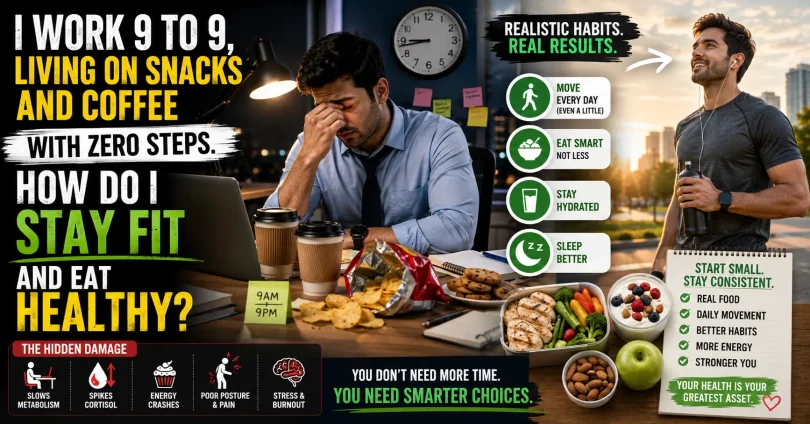
You leave home at 8 in the morning and return close to 10 at night.
Breakfast is either skipped entirely or replaced with a packet of biscuits grabbed on the way to work. Lunch is something quick eaten at your desk between calls. By evening, hunger kicks in and the office vending machine suddenly looks like the easiest solution. When you finally get home, you’re exhausted, hungry, and too caffeinated to fall asleep properly.
If this sounds familiar, you’re not alone.
For millions of Indian professionals, this isn’t an occasional bad day. It’s the routine. From IT employees in Bengaluru and Hyderabad to bankers in Mumbai and BPO professionals in Pune, long workdays often leave very little room for movement, home-cooked meals, or proper sleep.
The problem isn’t simply working long hours.
It’s what those long hours quietly replace: walking, regular meals, hydration, exercise, and recovery.
The effects rarely show up immediately. Instead, they appear gradually as persistent fatigue, increasing waistlines, poor sleep, acidity, rising cholesterol levels, or lifestyle diseases that seem to arrive much earlier than expected.
If you’ve ever wondered, “I Work 9 To 9, Living On Snacks And Coffee With Zero Steps. How Do I Stay Fit And Eat Healthy?“, the answer isn’t waking up at 5 AM for a workout or following an unrealistic diet plan.
The answer is building healthier habits that fit inside your existing schedule.
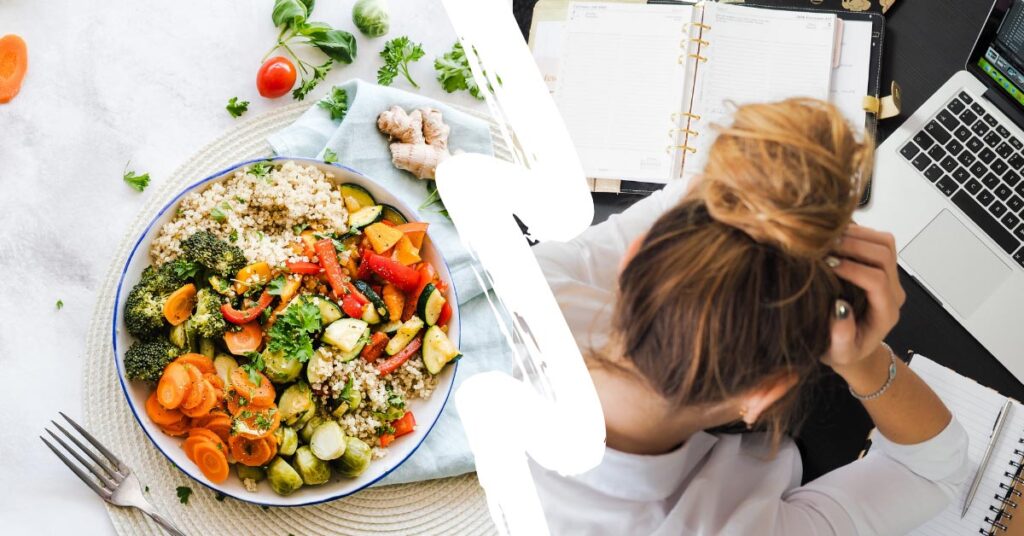
Why a 9-to-9 Lifestyle Can Be Tough on Your Health
Long working hours alone aren’t necessarily harmful. The real challenge comes from the combination of sitting for extended periods, relying on convenience foods, and having little time left for recovery.
Research consistently links prolonged sitting with increased risks of obesity, type 2 diabetes, heart disease, and back problems. Urban India has seen a sharp rise in sedentary lifestyles, particularly among office workers who spend most of their day in front of screens.
Then there is the food side of the equation.
Multiple cups of sweet tea or coffee, packaged snacks, late-night dinners, and very little water create a pattern that slowly affects metabolism and energy levels.
Individually, none of these habits seem serious.
Together, they create the perfect conditions for weight gain, poor sleep, insulin resistance, and constant tiredness.
Stress makes the situation even harder.
When work pressure increases, the body produces more cortisol, often called the stress hormone. Elevated cortisol levels are associated with stronger cravings for sugar, salt, and highly processed foods.
That evening urge for chips or Kurkure isn’t always about hunger. Sometimes it’s simply your body responding to stress and fatigue.
The Real Problem With Office Snacks and Endless Coffee Refills
Most office workers believe they need more caffeine to survive the day.
In reality, many energy crashes are caused by unstable blood sugar levels created by processed snacks and sugary drinks.
The biscuit with morning tea, the second coffee after lunch, and the packet of chips during evening meetings may seem harmless individually, but repeated every day they can have a surprisingly large impact on energy levels and long-term health.
Smarter Food Swaps for Busy Professionals
| Everyday Office Habit | Why It Becomes a Problem | Better Alternative |
|---|---|---|
| Tea breaks with cream or glucose biscuits | Refined flour and sugar provide quick energy followed by a sharp drop in concentration and energy levels. | Roasted chana, makhana, peanuts, or mixed seeds |
| Four or five sweet teas or coffees every day | Excess sugar and caffeine can increase calorie intake and affect sleep quality. | Green tea, black coffee, or unsweetened tea limited to two cups |
| Instant noodles during busy workdays | Low in protein and fibre but high in sodium, leaving you hungry again quickly. | Homemade poha, vegetable upma, oats, or khichdi |
| Chips and packaged snacks from vending machines | Usually high in salt and unhealthy fats while providing very little nutrition. | Almonds, walnuts, roasted peanuts, or trail mix |
| Packaged fruit juice as a healthy drink option | Many juices contain sugar levels similar to soft drinks. | Whole fruits, coconut water, or fresh nimbu paani |
| Fried canteen snacks in the evening | Heavy foods often lead to sluggishness and reduced productivity. | Boiled eggs, sprouts, paneer cubes, or wraps |
| White bread sandwiches with mayonnaise | Refined carbohydrates and processed spreads rarely keep hunger away for long. | Multigrain bread with eggs, paneer, hummus, or peanut butter |
The good news is that you don’t need to change everything overnight.
Replacing just two or three daily habits can make a noticeable difference within a few weeks.
What a Realistic Healthy Day Looks Like on a 9-to-9 Schedule
Most health advice falls apart the moment it meets a real workday.
A plan that depends on a 5 AM workout, elaborate meal prep, and an hour-long evening walk isn’t realistic for someone leaving home at 8 in the morning and returning close to 10 at night.
If you’re asking, “I Work 9 To 9, Living On Snacks And Coffee With Zero Steps. How Do I Stay Fit And Eat Healthy?”, the answer has to fit into the life you’re already living.
The goal isn’t perfection. It’s damage control through smarter choices that don’t require extra hours in your day.
Before Leaving for Work: The First 15 Minutes Matter
The first few minutes after waking up often determine how the rest of the day goes.
Before reaching for tea or coffee, drink two glasses of water. After seven or eight hours without fluids, your body needs hydration more than caffeine.
Breakfast doesn’t have to be complicated either.
Two boiled eggs, a bowl of curd, a banana with peanuts, or even leftover dal with roti is enough to give your body protein and energy for the first half of the morning.
Skipping breakfast and surviving on biscuits until lunch usually leads to stronger cravings and poor food choices later in the day.
If time allows, spend five minutes moving your body before leaving home. Neck rolls, shoulder rotations, light stretching, or a few bodyweight squats can reduce some of the stiffness that builds up after hours of sitting.
During Office Hours: Small Decisions Add Up
Most people underestimate how powerful small habits become when repeated every working day.
Taking the stairs for one or two floors, standing during calls, or walking to a colleague’s desk instead of sending a message may seem insignificant in isolation. Over weeks and months, those decisions add up.
One simple target is to avoid sitting continuously for more than 60 to 90 minutes.
Stand up.
Walk to refill your water bottle.
Take a short lap around the office floor.
Even two or three minutes of movement improves circulation and breaks the cycle of prolonged sitting.
Hydration matters just as much.
Many people mistake dehydration for hunger or tiredness and respond with another cup of coffee instead of a glass of water.
Keeping a bottle on your desk and refilling it twice during the workday is an easy way to stay on track without overthinking it.
Lunch: The Meal That Shapes Your Afternoon
For desk workers, lunch often determines whether the afternoon feels productive or exhausting.
Heavy meals rich in fried foods and refined carbohydrates may feel satisfying in the moment, but they often lead to the familiar 3 PM energy crash.
A simple combination of dal, rice, vegetables, roti, rajma, chole, paneer, or curd provides a much better balance of protein, fibre, and slow-release carbohydrates.
Carrying lunch from home every day isn’t realistic for everyone.
But even managing it three times a week can improve food quality significantly over the course of a year.
On days when eating out is unavoidable, choosing a basic thali with roti, dal, and vegetables is usually a better option than fried snacks or fast food.
Beating the Afternoon Energy Crash
Almost every office worker knows the feeling.
Around 3 or 4 PM, concentration drops, energy disappears, and suddenly tea, coffee, or something salty starts sounding irresistible.
In many cases, this isn’t caused by lack of caffeine.
It’s the result of blood sugar rising quickly after lunch and then falling just as quickly a few hours later.
A small snack at the right time can make a surprisingly big difference.
Good options include:
- Roasted chana
- Peanuts
- Makhana
- Fruit
- Sprouts
- A handful of nuts
These foods provide more stable energy and help prevent the evening vending machine visit from becoming part of your daily routine.
Dinner: Lighter Usually Works Better
Late dinners are a reality for many professionals, especially in large cities where commuting alone can take hours.
While eating early isn’t always possible, eating lighter often is.
Meals such as khichdi, dal with rice, curd rice, vegetable soup, or paneer with vegetables are generally easier to digest late in the evening than biryani, fried food, or heavy takeout meals.
The goal isn’t to create strict rules.
It’s simply to avoid making digestion work overtime when your body is getting ready for sleep
Movement Hacks That Require Zero Extra Time
The usual advice sounds simple enough: join a gym, go for a morning run, do an hour of strength training.
The problem is that none of those suggestions make much sense when your day starts before sunrise and ends long after sunset.
If your reality is, “I Work 9 To 9, Living On Snacks And Coffee With Zero Steps. How Do I Stay Fit And Eat Healthy?”, your solution needs to work inside your existing schedule, not on an imaginary one.
The good news is that movement doesn’t have to happen in a gym to matter.
In fact, some of the biggest health gains come from reducing long periods of uninterrupted sitting.
The Two-Minute Rule
A simple principle works surprisingly well:
If a movement takes less than two minutes, do it immediately instead of postponing it.
Walk to a colleague’s desk instead of sending a message.
Refill your own water bottle instead of waiting until you’re desperate for a drink.
Take the stairs for one or two floors.
Stand while checking emails or attending calls that don’t require a screen.
None of these actions feel like exercise in the moment. Over the course of a week, however, they can add hundreds or even thousands of extra steps.
Mini Exercises That Fit Into a Workday
You don’t need gym clothes or equipment to wake up muscles that have been inactive for hours.
Some easy options include:
- Calf raises while waiting for printouts or coffee.
- Shoulder rolls and neck stretches during long calls.
- Seated spinal twists every couple of hours.
- Standing up and stretching after finishing a meeting.
- Short walks around the office floor after lunch.
These movements won’t replace a workout, but they help reduce stiffness, improve circulation, and make long desk hours easier on your body.
Why Weekend Exercise Isn’t Enough
Many professionals try to compensate for an inactive week by exercising heavily on weekends.
While a long walk or workout on Saturday is definitely beneficial, it doesn’t completely undo five days of sitting for ten or twelve hours at a stretch.
Think of movement like brushing your teeth.
Doing it consistently works better than doing a lot of it occasionally.
Even small amounts of activity spread throughout the week provide more benefits than one intense session followed by days of inactivity.
Meal Prep for People Who Don’t Have Time to Meal Prep
Most people know what healthy food looks like.
The challenge isn’t knowledge.
It’s time.
After a long commute and an exhausting workday, cooking from scratch every evening isn’t realistic for most people.
That’s where simple preparation can make a huge difference.
The goal isn’t Instagram-worthy meal boxes.
The goal is making healthy choices easier than unhealthy ones.
The 45-Minute Sunday Strategy
Spending less than an hour preparing a few basics can make the entire week easier.
For example:
- Cook a larger portion of dal that can last several meals.
- Boil eggs for quick breakfasts and snacks.
- Wash and chop vegetables in advance.
- Roast peanuts or makhana for office snacks.
- Prepare ingredients for poha or upma for busy mornings.
When healthy food is already available, you’re much less likely to rely on takeout or vending machines.
Office Lunches That Actually Work
The best office lunch isn’t the most exciting one.
It’s the one you’ll actually carry consistently.
Simple options often work best:
- Dal, rice, and sabzi.
- Roti with paneer or vegetables.
- Rajma or chole with rice.
- Curd rice with vegetables.
- Sprout salads with lemon and spices.
- Boiled eggs with fruit and nuts.
A homemade meal three times a week is infinitely better than an unrealistic plan that lasts only three days.
Hydration: The Health Habit Most Office Workers Ignore
Many people spend entire workdays mildly dehydrated without realizing it.
The symptoms are surprisingly familiar:
- Headaches.
- Afternoon fatigue.
- Difficulty concentrating.
- Constant cravings.
- Feeling hungry soon after meals.
In many cases, the body is asking for water but receiving another cup of coffee instead.
An Easy Way to Reach 3 Litres Without Tracking Every Sip
You don’t need an app or complicated calculations.
A simple routine works:
- Two glasses immediately after waking up.
- One glass before every meal.
- Keep a bottle on your desk and refill it twice.
- One glass before going to bed.
For most adults, this is enough to comfortably reach daily hydration goals.
Coconut water, buttermilk, and unsweetened nimbu paani can also contribute to fluid intake while providing electrolytes during hot Indian summers.
Wrapping Up
Working a 9-to-9 job can make healthy living feel impossible. Long commutes, endless meetings, late dinners, and back-to-back deadlines leave very little room for meal prep, workouts, or even a proper lunch break. But being busy doesn’t mean your health has to take a back seat.
If you’ve ever found yourself thinking, “I Work 9 To 9, Living On Snacks And Coffee With Zero Steps. How Do I Stay Fit And Eat Healthy?”, the answer isn’t a strict diet or an unrealistic fitness routine. It’s about making practical choices that fit into the life you already have.
Carry lunch from home a few times a week. Replace one processed snack with something more nourishing. Drink water before reaching for another cup of coffee. Stand up during calls, take the stairs when you can, and look for small opportunities to move throughout the day.
These habits may seem insignificant on their own, but over months and years they add up in ways that matter.
The afternoon fatigue, frequent acidity, poor sleep, and constant dependence on caffeine aren’t things you simply have to accept as part of adulthood or corporate life. Often, they’re early signals that your body needs a little more care and a little less convenience.
You don’t need to change everything overnight.
Start with two or three small changes, stay consistent for a few weeks, and build from there. Sustainable health isn’t created through perfection. It’s built through habits you can realistically maintain even on your busiest days.
Because the goal isn’t to become a fitness influencer.
The goal is to have enough energy for your work, your family, and your life outside the office — not just today, but ten years from now.










Discussion about this post